
· Irvin Charleston
Struggling For Home Workout Ideas? 10+ Bodyweight Workout Ideas for Over 40 (No Equipment Needed)
Have you been meaning to get back to exercise, but can’t think of what to do…
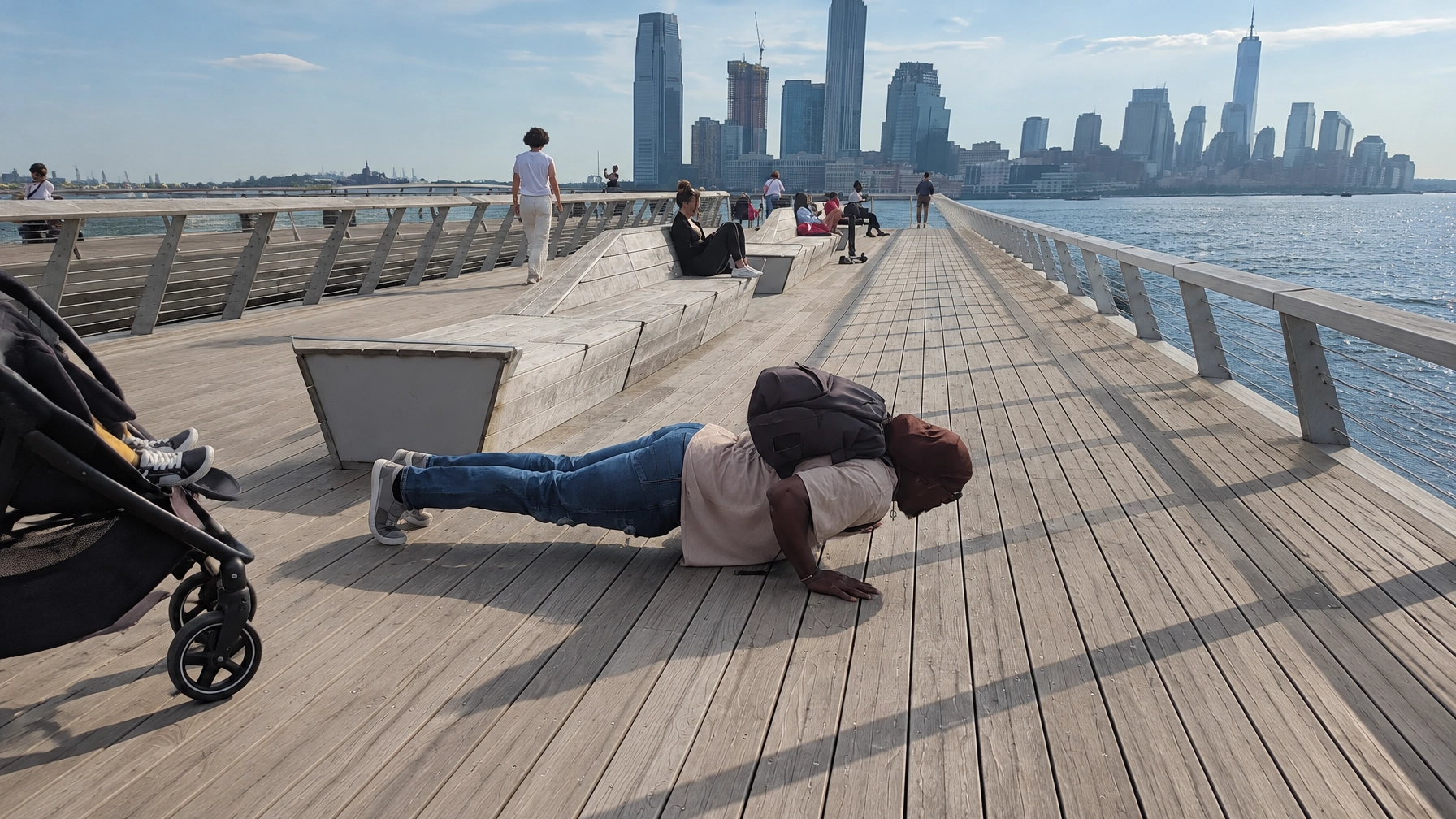
Have you been meaning to get back to exercise, but can’t think of what to do at home? You can start with a wall, some floor space, and a few controlled movements. You do not need to be in shape first. You do not even need much equipment. The photo above is a push-up with nothing but a backpack for weight, done on a public pier on an ordinary day.
If you have been out of practice for years, it makes sense to start smaller than the workouts you remember. The goal at first is to find movements you can do steadily and comfortably, then build from there.
How often should you start?
Try a short session twice a week, with at least one rest day between sessions. For each exercise, begin with 1 set of 6–10 controlled repetitions. If that feels manageable and your form stays steady, you can gradually add repetitions or another set.
The CDC recommends that adults work toward at least 150 minutes of moderate-intensity activity each week and muscle-strengthening activity on at least two days. That’s a longer-term guideline, not a pass-or-fail starting point. A short home workout can be one practical step toward it. Read the CDC’s adult activity guidelines.
12 bodyweight workout ideas to try at home
Choose a few movements to start. You do not need to do all 12 in one session.
1. Chair sit-to-stand
Sit near the front of a sturdy chair with your feet planted. Lean forward slightly and stand. Lower back down with control. Use your hands on your thighs or the chair if you need help.
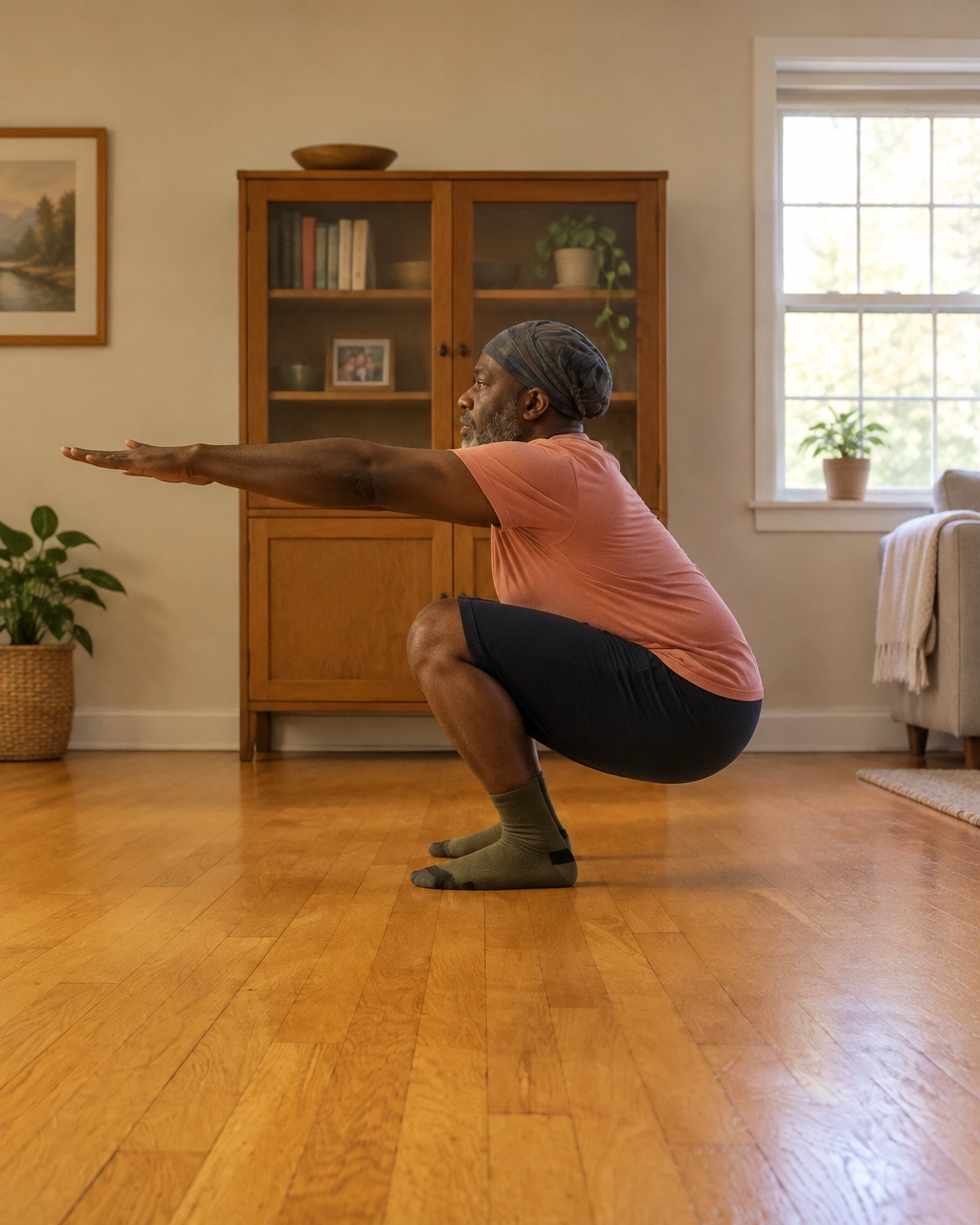
2. Supported squat
Stand with a chair or wall nearby. Bend your knees a little, as if starting to sit, then stand tall again. Keep the movement shallow at first. Use support for balance if needed.
3. Wall push-up
Face a wall and place your hands around shoulder height. Step back until your arms are straight, then bend your elbows to bring your chest toward the wall. Push back smoothly. Move your feet farther from the wall to make it harder, or closer to make it easier.
4. Counter push-up
If wall push-ups feel comfortable, try a sturdy kitchen counter. Place your hands on its edge, step back, and lower your chest toward it. Check that the counter is stable before you begin.
5. Hip hinge
Stand tall with your knees slightly bent. Push your hips back as your upper body tips forward, keeping your back comfortable and steady. Return to standing by bringing your hips forward. Think of closing a door with your hips.
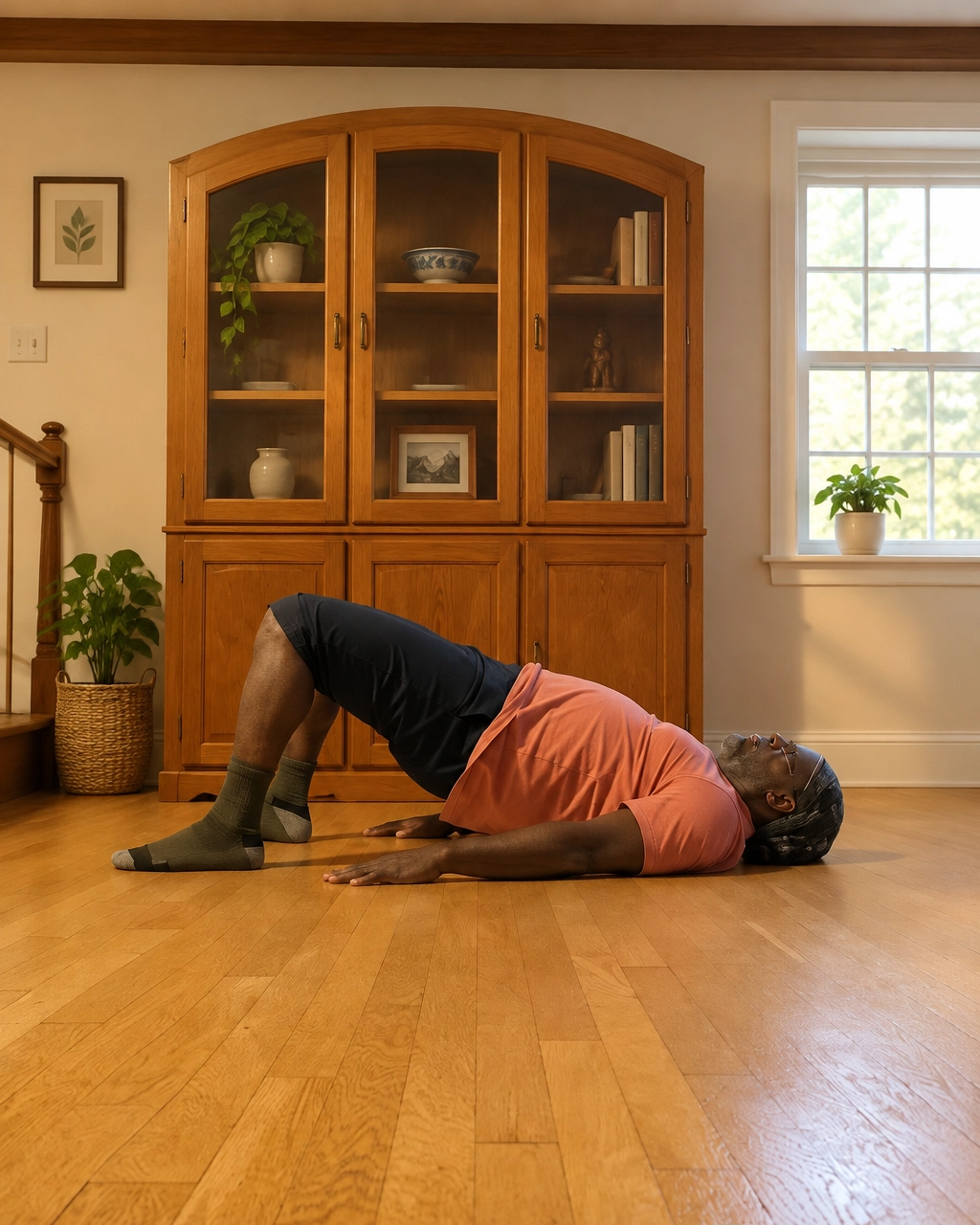
6. Glute bridge
Lie on your back with your knees bent and feet on the floor. Tighten your buttocks and lift your hips a few inches. Lower slowly. Skip this one if getting down to or up from the floor feels unsafe; try the standing hip hinge instead.
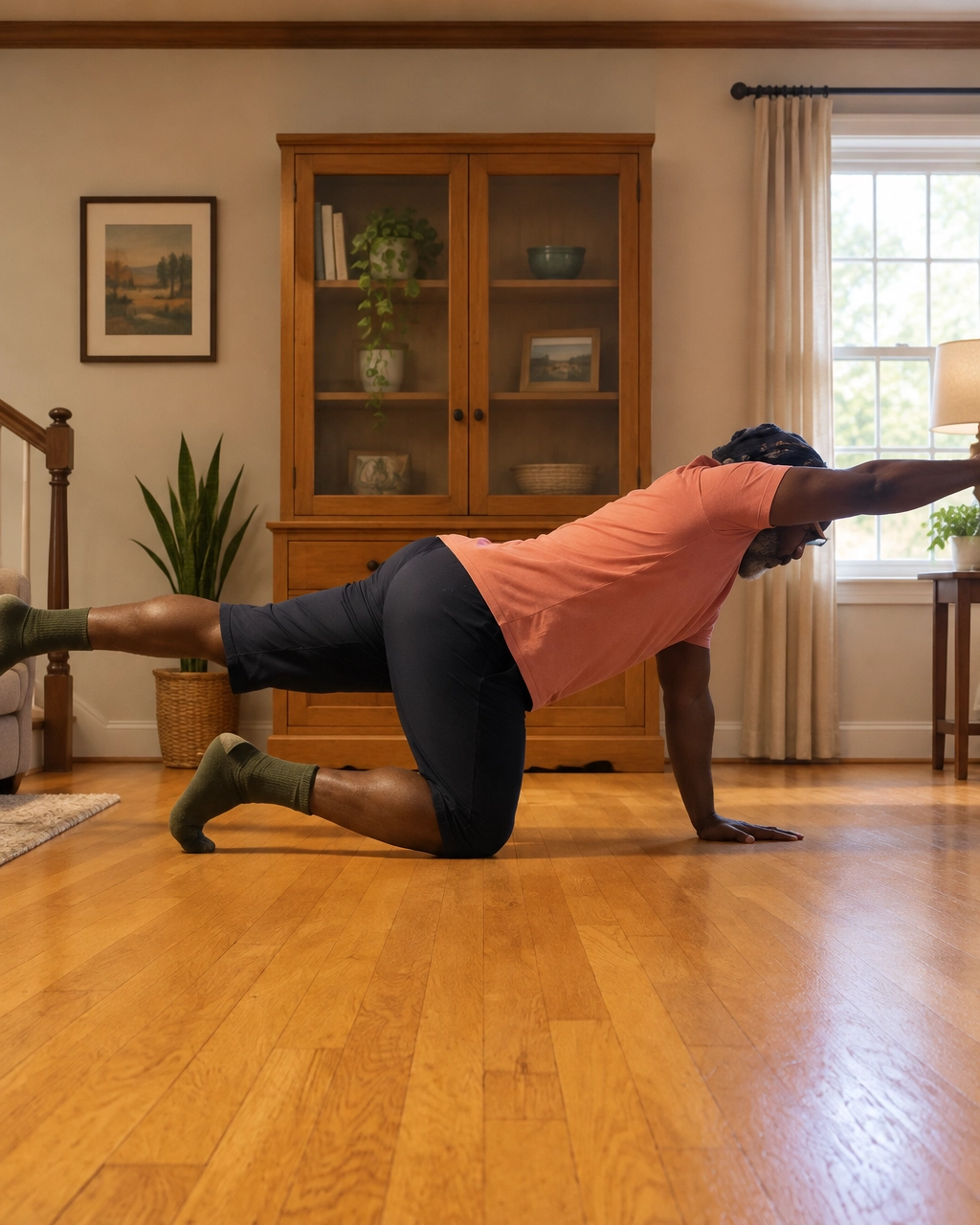
7. Bird-dog
Start on your hands and knees, if that position is comfortable. Reach one arm forward or slide one leg back, then return to the start. Alternate sides. Keep the movement small enough to stay balanced.
8. Dead bug
Lie on your back with your knees bent and feet on the floor. Gently tighten your middle, then slide one heel away and bring it back. Alternate legs. Make the movement smaller if your back arches or feels uncomfortable.
9. Standing calf raise
Hold a wall or sturdy chair. Rise onto your toes, pause briefly, then lower your heels. Keep your body upright and use your hands for balance, not to pull yourself up.
10. Supported march
Stand beside a wall or chair. Lift one knee a comfortable amount, lower it, then switch sides. Keep your steps slow and controlled.
11. Side leg raise
Hold a chair or counter. Move one leg out to the side a short distance without leaning your body. Bring it back and switch sides. Keep your toes facing forward.
12. Supported step-back
Hold a chair or counter. Step one foot back, bend both knees slightly if comfortable, and return to standing. Keep the step small. You can also practice stepping back and returning without bending your knees.
What could a first workout look like?
Pick four movements: chair sit-to-stand, wall push-up, hip hinge, and supported march. Do one set of 6–10 repetitions for each, or march for 20–30 seconds. Rest between movements for as long as you need to feel ready to continue.
A workout can take about 10–15 minutes, including a few minutes of easy walking or gentle movement to warm up. If that feels like too much, do two exercises and stop there. You can add more next time.
You might find it helpful to write down what you did and how it felt. That gives you a simple way to notice whether you are ready to add a repetition or another set.
How do you make an exercise easier or harder?
Change one thing at a time. For a squat, start by standing up from a chair. Later, try a shallow squat without sitting down. For a push-up, start at a wall; when that feels manageable, move to a counter.
Keep the movement controlled. Stop a set when you can no longer keep steady form. Muscle effort is expected, but sharp or worsening pain is a reason to stop and reconsider that movement.
What if you have not exercised in years?
That is a reason to begin gently, not a reason to feel behind. You may need more rest between movements, a smaller range of motion, or a hand on the wall for balance. Those are useful adjustments.
If you have a chronic health condition, significant joint pain, a disability, or you have been inactive for a long time, consider asking a healthcare professional what is appropriate for you before starting. Stop exercising and seek medical help for symptoms such as chest pain, fainting, or severe unusual shortness of breath.
Do bodyweight workouts count as strength training?
Yes. Exercises that make your muscles work against your body weight can build strength. The amount of effort depends on the movement and how you do it. A wall push-up is usually easier than a counter push-up; a sit-to-stand may be more manageable than an unsupported squat.
These are starting points, not a complete plan for every person. What feels right can depend on your health, current ability, and goals.
Do you need to follow a set program?
Not to begin. A few repeatable movements can help you get back into a routine. If you want a clearer picture of where to start, the Strength Audit begins with 10 questions that take about two minutes. The next step is a $9 one-time purchase with no subscription; sales are final. It gives you one short at-home test each morning for seven mornings, with four levels per test, and a scorecard across six areas. You can retest in 90 days.
The audit is a measurement, not a workout program. If you later want help building a plan from your results, you can read about 12-week coaching.
FAQ: How long should a beginner workout take?
About 10–15 minutes is enough for a first session. Start with a few movements and take breaks as needed. You can build the session gradually as it becomes more comfortable.
FAQ: Should you feel sore afterward?
You might notice mild muscle soreness, especially when returning after a break. Soreness is not required for progress. If pain is sharp, worsening, or makes normal movement difficult, stop that exercise and seek appropriate advice.
FAQ: What if getting down to the floor is difficult?
Choose standing exercises such as chair sit-to-stand, wall push-ups, hip hinges, calf raises, and supported marching. A home workout does not have to include floor exercises.
Where can you train when you have no equipment at all?
Outside. A park bench, a low wall, or a stretch of open pavement is enough. The boardwalk push-up above used a backpack for weight; the same idea works with a park bench for sit-to-stands, a tree or pole for balance during calf raises, and flat ground for a short supported march. Public spaces are free, and moving outdoors adds fresh air and variety.
If that sounds useful, take the Strength Audit online, pay the $9, and start the week.
Stay strong, stay simple.
See where you stand
Ten questions, about two minutes. Your answers decide which of the six tests you take first.